This web page is a concept developed by Chris Lysy of freshspectrum.com for educational purposes. You can see how the post was created, and all of the original materials by following this link.
Grantee Stories
Everyone is Family: The Story of Luqu Kenu
Everyone is Family: The Story of Luqu Kenu
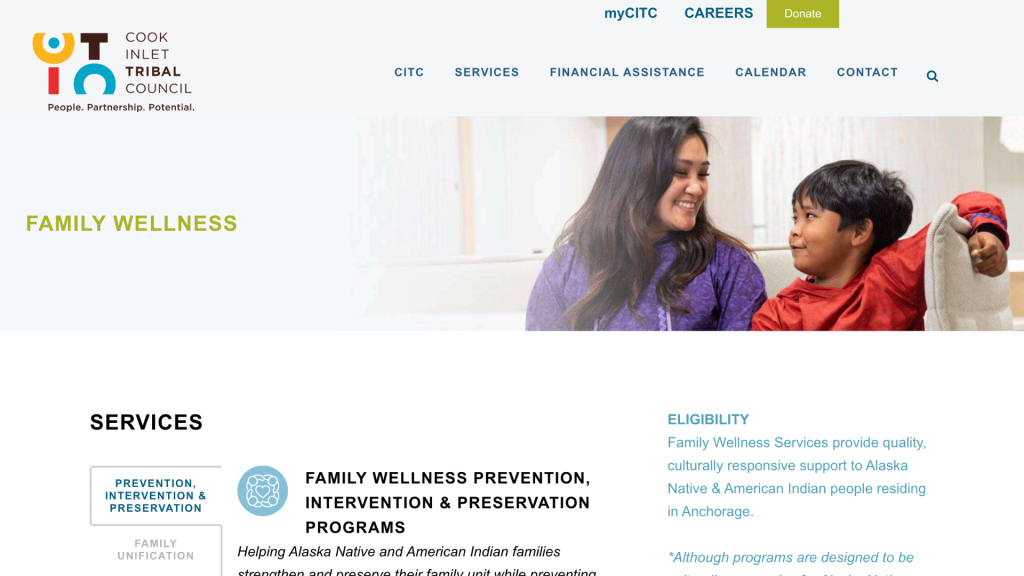
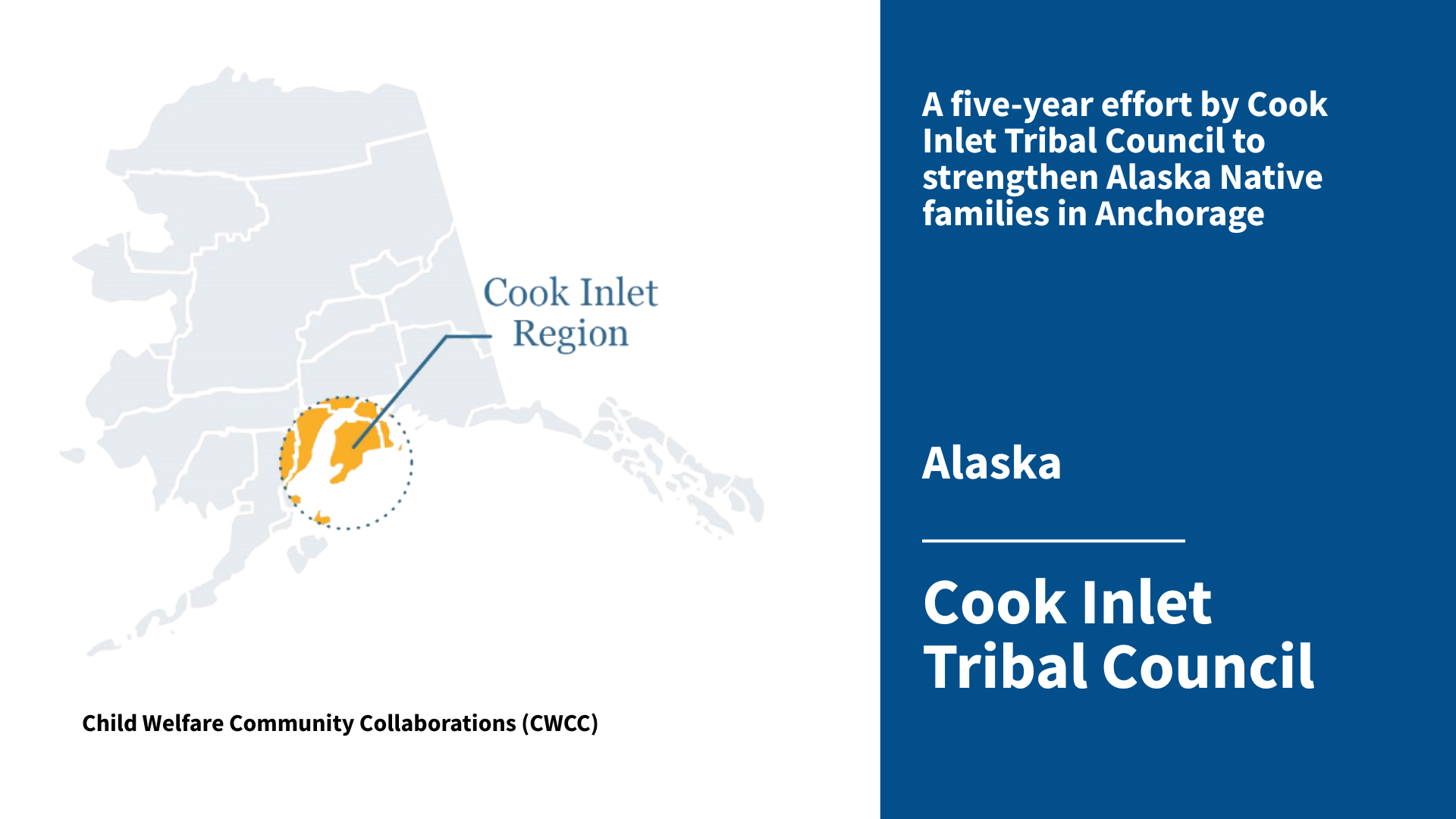
A five-year effort by Cook Inlet Tribal Council to strengthen Alaska Native families in Anchorage
Luqu Kenu. In Athabaskan, it means Everyone is Family.
Cook Inlet Tribal Council (CITC) received their grant in September 2018. The Luqu Kenu — Prevention project aimed to create more connected, healthy, and resilient families; reduce the number of children at risk of maltreatment and out-of-home placements; and mitigate barriers to service access in Alaska’s Cook Inlet region.
The numbers behind the project tell part of the story. Alaska Native and American Indian (AN/AI) children are far more likely to experience Adverse Childhood Experiences than their non-Native peers — 28.4% of Native people statewide have experienced four or more, compared to 18.2% of white people. And 57% of all children in Alaska’s foster care system are AN/AI, even though AN/AI children make up just 18.9% of the state’s kids.
Anchorage draws people from across the state — people who become cut off from their home village culture and other community supports.
Who the Program Served
Luqu Kenu focused on AN/AI families in the municipality of Anchorage who were engaged in at least one service at CITC, had at least one risk factor for child abuse or neglect, and were not currently involved with the child welfare system. All AN/AI families in the municipality were eligible for services.
What Was Missing
Before building anything, CITC took stock of what the community needed. Four gaps stood out:
A lack of culturally appropriate mental and behavioral health services. Limited access to services due to capacity or accessibility, especially transportation. A disproportionate placement of Alaska Native children in foster care — the licensed, non-kinship, ICWA-compliant foster homes in Anchorage could only accommodate 3.6% of the Native youth in care. And ongoing housing and employment needs.
Building the Team
CITC built on three earlier ACF-funded projects, including an earlier version of Luqu Kenu. The planning process started with partners from those prior efforts. A strategic planner helped conduct an environmental scan to identify gaps. By the end of the 10-month planning period, partners were in place for most areas — though mental health and legal services took longer, requiring careful consideration of trust and cultural compatibility.
Most partners were divisions or subsidiaries of CITC: Employment & Training, Recovery Services, Youth Empowerment Services, Clare Swan Early Learning Center, and the Alaska Native Justice Center. External partners included Cook Inlet Native Head Start, Southcentral Foundation’s Nurse-Family Partnership, and Abused Women’s Aid in Crisis, among others.
The project shared meeting minutes with the full group, including action plans that incorporated committee participants’ ideas and suggestions.
What Luqu Kenu Actually Did
Family Navigators
Family navigators met with participants one-on-one and used the Luqu Kenu tools to guide a dialogue about participants’ individual areas of strength and areas to bolster. After the initial meeting, navigators conducted parent support check-ins, provided referrals and connections to essential resources, and encouraged participants to join family peer activities.
Navigators met parents where they were — by phone, in-person at home, in the community. Participants determined the frequency and timing, but navigators reached out at least monthly.
Cultural Social Gatherings
These social activities provided opportunities for families to strengthen social bonds while reinforcing cultural and spiritual connections. All activities were infused with Alaska Native cultural elements and fell into two main categories: Cultural and Spiritual activities such as dance, singing, storytelling, and creating traditional crafts; and Collaborative Subsistence Gathering activities such as fishing and berry picking. Luqu Kenu provided a full-year calendar of monthly offerings, including Tribal Elders as mentors in the final year of the project.
Wellness Services
The Luqu Kenu Wellness Consultant, a member of the Tlingit and Haida tribal group, developed and delivered one-on-one adult consultations, parent and children group sessions, and wellness groups. The sessions were aligned with the Tribal Wellness Framework and infused with Alaska Native cultural elements.
The Tribal Wellness Framework
The Tribal Wellness Framework is a work in progress, developed within the Child and Family Services Department at CITC, with input from academic partners, the Wellness Consultant, and the Learning and Advising Committee, including Tribal Elders. The Learning and Advising Cohort asked and answered important questions for integrating culture in a strengths-based prevention approach.
Building Tools That Actually Fit
The Five Factors Assessment Tool was built using an indigenous lens, with significant input from participants and key community partners and leaders. It assesses confidence and satisfaction across five areas: financial stability, education and training, cultural and spiritual wellness, healthy lifestyles, and relationships that lead to families’ success. The tool was used across all programs at CITC and was integral to the structure of the new data collection and analytics system.
CITC also built the Creating Connections guide, which organized resources and activities into the six protective factors for use during family conversations. The Menu of Services displayed the four core Luqu Kenu services and allowed participants to drive their own process by selecting based on their preference and needs. The Referral Form screened families by confirming physical and legal custody, rather than inquiring whether children were in state or tribal child welfare custody.
The Data Problem
CITC built a Family Information System that tracked participation across all CITC departments, connected services, and provided staff a full picture of each family. The system was completed in June 2023.
But data was also a source of real tension.
The Five Factors Survey was administered across multiple programs — which meant families engaged in more than one program had to complete the survey for each one. Frontline staff noted that participants found it confusing and burdensome. The new data system was designed to address this.
More fundamentally, CITC’s strengths-based philosophy ran into the deficit-based assumptions baked into state and federal systems. Medicaid-funded services for children applied only to those with diagnoses. The 1115 Medicaid waiver required a comprehensive screening for risk and a family service plan with goals and objectives.
CITC’s Child and Family Services Department achieved CARF accreditation to establish credentials for billing. However, the 1115 Medicaid Waiver billing for Level 1 home-based treatment requires a type of family plan with goals that does not align with the family navigation approach CFSD uses.
What Got in the Way
Staff and partners identified five main factors that hindered implementation.
Redundant data collection was burdensome for participants enrolled in multiple programs. Transportation and childcare were continuing barriers — navigators addressed this by meeting families wherever was most convenient. Dislocation and trauma posed continuing challenges: many participants traveled to Anchorage from their home villages and found themselves cut off from kin, culture, and community supports. These challenges were compounded by the 2018 Anchorage earthquake, which displaced CITC workers and halted operations.
Virtual implementation caused delays throughout the project. Restrictions on in-person interactions — due first to the 2018 earthquake and then to COVID-19 — were a major barrier. Limited participant access to and comfort with computers further complicated things. Staff reported it was challenging to build trust without meeting in person.
What They Learned
After four years of implementation, Luqu Kenu leaders and staff described five key lessons.
Cross-partner coordination and collaboration offers more than just capacity. Working with partners requires identifying the core components of your program so you can communicate why they should refer families. Getting to know what services partners offer and the strategies they use can bring insight into ways to improve your own project.
System change requires patience. The process of changing the child welfare system at both the community and state level was difficult, time-intensive, and required patience. Leaders and partners have spent years trying to make incremental changes.
Thinking about sustainability early is helpful. The project director’s vision of sustainable work in the family and child welfare space predated this grant and was an important ingredient in bringing people together and building commitment to the work.
Identifying the right mix of services and activities is challenging and takes time. The project director worked with the broader project team throughout the project to integrate feedback from participants into materials and activities. This was an iterative process that required the team to define and redefine terms, incorporate input into redesigned activities, and do a lot of thoughtful listening.
Making programming culturally relevant is important but requires commitment.
What Comes Next
CITC completed their grant activities in 2023 and plans to continue most, if not all, project activities with reduced staffing.
The Five Factors Survey continues across CITC. The Family Information System is operational. The Tribal Wellness Framework is still being developed. The project director’s engagement with the Alaska Tribal Child Welfare Compact continues.
Grantee Stories
Everyone is Family: The Story of Luqu Kenu
This dashboard was developed by Chris Lysy at freshspectrum.com as part of the Before and After series — adapting publicly available research to make it more accessible. It draws on three grantee profiles and the executive summary from the Child Welfare Community Collaborations cross-site process evaluation (OPRE, 2024), conducted by Abt Global and Child Trends.
The three grantee profiles retold here: Cook Inlet Tribal Council, Inc. (OPRE Report 2024-084); Allegheny County Department of Human Services (OPRE Report 2024-266); Partnership for Strong Families, Inc. (OPRE Report 2024-271). The cross-site executive summary: OPRE Report 2024-361.